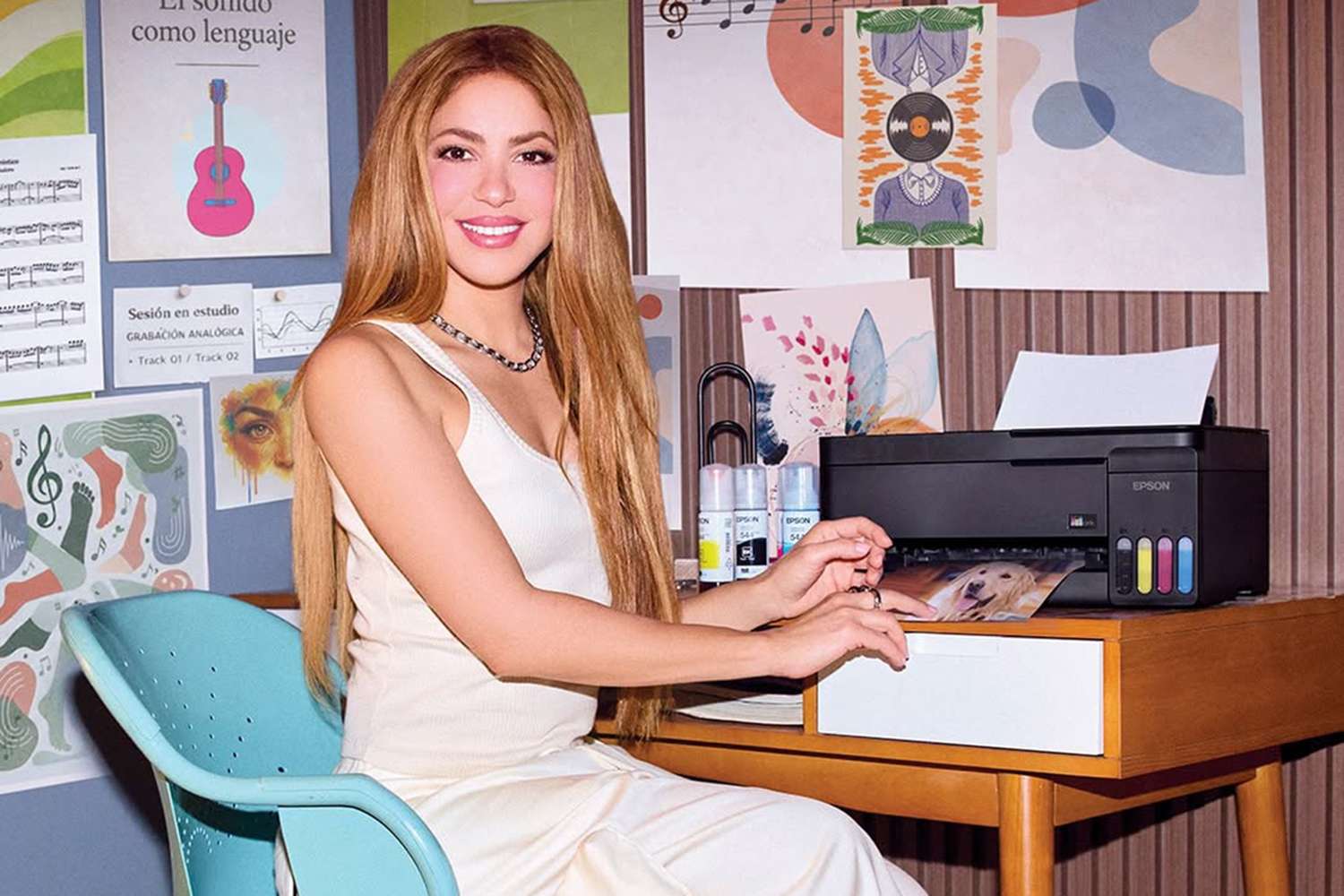
Shakira’s recreation of a 1997 office photograph was meant to update an old internet joke. Instead, it reopened a more basic argument: was the original picture ever a meme in the first place?
On August 4, Shakira posted a new version of the familiar desk pose to her verified Instagram account. The original was taken during a 1997 visit to the newsroom of Colombian newspaper El Heraldo. In the 2026 update, the computer has disappeared. Shakira sits beside an Epson printer while a photograph of a dog emerges from the machine, with her hands arranged as though the printer were also the keyboard.
The setup was part of an Epson collaboration and the caption played with the Spanish word “impresión,” which can refer to an impression as well as printing. The printer was not an accidental prop. It was the product and the punchline.
But when the before-and-after images spread beyond Shakira’s own audience, a noticeable share of the conversation rejected the description attached to them. Commenters in a large r/Millennials discussion repeatedly argued that the 1997 image was simply a publicity photograph, not a meme. Others asked when it had supposedly become one. A separate highly viewed Reddit discussion mocked the tendency to label every rediscovered celebrity image “iconic.”
The disagreement was not universal. Other commenters pointed out that the photograph had circulated as a joke in Latin American internet culture, particularly because Shakira appeared to be working at a computer whose screen looked switched off. Variations have presented the image as shorthand for pretending to be productive, surviving an office job or confidently using technology without knowing what it does.
That distinction matters. A photograph can be famous without being a meme. It can go viral once without becoming a reusable format. Under the stricter definition, the audience has to repeatedly copy, alter or recontextualise it until the image carries a shared joke beyond its original setting. By that measure, Shakira’s office photograph did eventually acquire a memetic life—but not necessarily at the moment it was taken, and not equally in every part of the internet.
The looser modern definition is less demanding. “Meme” now regularly means any recognisable online image with a joke attached, even if most people have only seen it once and nobody has substantially remixed it. That is why the recreation produced two incompatible reactions: one audience recognised an established regional joke, while another saw marketing copy promoting an ordinary old photograph to meme status.
The Epson recreation makes that tension especially visible because it turns the disputed meme into an advertisement. A brand did not merely reference something audiences had already been remixing; it formally packaged the image as cultural nostalgia, complete with a product, a celebrity and a campaign hashtag. Calling it a meme made the advert sound like a shared internet memory rather than a sponsored recreation.
So have meme standards fallen? Possibly. The word has become a convenient label for almost anything that is familiar, captionable and online. But the argument also shows how fragmented internet culture has become. An image can be a genuine long-running meme within one language or region and look like a random celebrity photo everywhere else.
Confirmed: Shakira published the recreation on August 4, 2026; the setup featured Epson products; the original photograph came from a 1997 visit to El Heraldo; and commenters publicly disputed whether the original deserved to be called a meme.
Not confirmed: the financial terms of Shakira’s Epson collaboration or claims that the new photograph was AI-generated. The available post should not be treated as proof of either.
No comments yet. Be the first to add something useful.