An internet joke has acquired a microphone, a crowd and a cash prize.
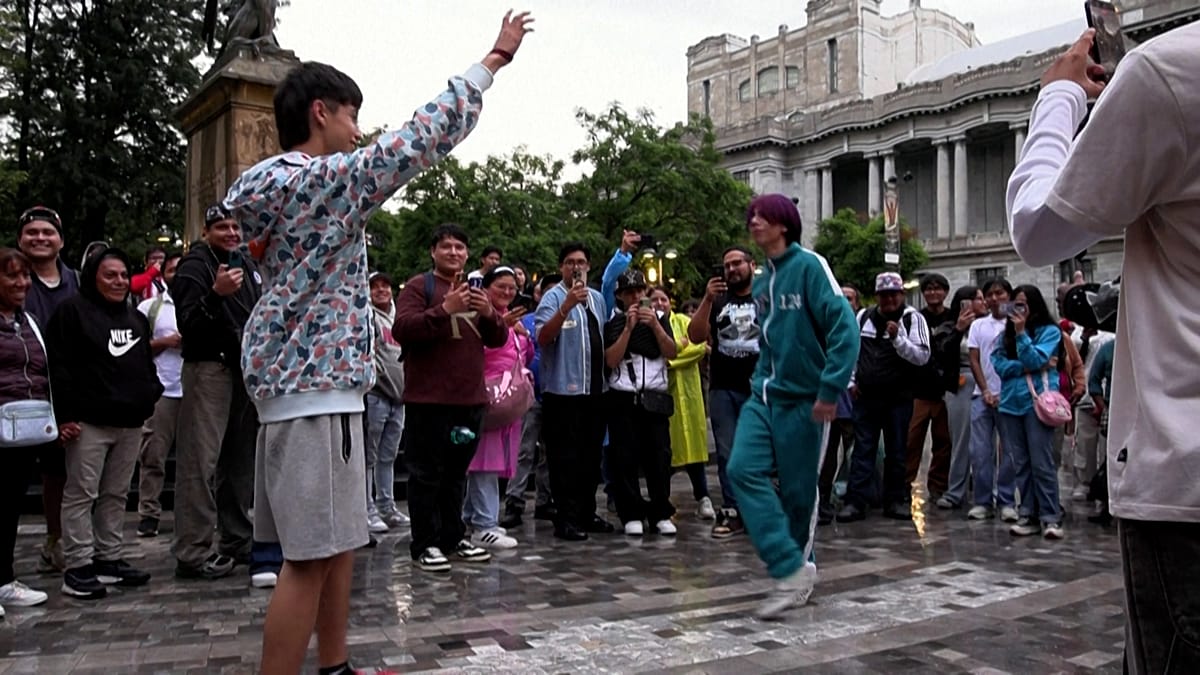
Across Mexico, young people are staging “aura battles”: brief public contests in which competitors use poses, dances, facial expressions and theatrical walks to persuade a crowd that they have the most charisma. There is no physical fight and no fixed rulebook. The point is to make an entrance, command attention and make it look effortless.
The format comes from “aura farming,” online slang for doing something so confident, stylish or perfectly timed that it seems to earn imaginary aura points. On social media, the joke is often attached to a clip: a clean football move, a devastating comeback, a person walking into a room at exactly the right moment. The new events make that invisible score visible by asking spectators to pick a winner.
A meme becomes a street event
Recent reporting from Veracruz describes contestants taking turns for only a few seconds at a time. Their performances can include viral choreography, exaggerated reactions, meme references or a deliberately overconfident stare. The audience response is the closest thing the contests have to a scoring system.
That looseness is not a flaw. It is what lets an aura battle travel. A dance-off can become a pose-off; one group may reward the funniest performance while another prefers someone who can hold a deadpan expression in front of a noisy crowd. The contest is instantly legible because the audience already understands the language from short-form video.
The events are becoming more organised, too. Euronews reported that a recent battle awarded 2,000 Mexican pesos to the winner and 1,000 pesos to the runner-up. Other events have been announced in Xalapa and Mexico City, while similar gatherings have appeared in Brazil, Argentina, Bolivia, Paraguay and Peru.
The joke is that nobody can measure it
“Aura” works online because it sounds measurable while remaining completely subjective. Nobody has a genuine aura counter. That makes every claim ridiculous and every argument available for debate. A public competition does not solve that problem; it turns it into the entertainment.
A competitor can arrive with a slick outfit and a practised routine, then lose to someone whose whole performance is one perfectly timed shrug. The crowd is not judging technical difficulty in the way it would at a dance competition. It is judging whether a person made the moment feel bigger.
That is why the battles fit public squares and parks. They require little equipment, have a low barrier to entry and produce the same short, high-impact clips that helped the phrase spread in the first place. A good round can be understood with the sound off, then reposted with a caption arguing that the wrong person won.
From private confidence to a shared spectacle
There is something gently absurd about awarding real money for an imaginary quality, but that absurdity is the appeal. Aura farming began as a way to turn ordinary moments into a running joke about status. The live version lets people perform that joke together.
The result sits somewhere between a talent show, a meme convention and a very short fashion walk. It also gives the crowd a role beyond filming: spectators decide which gesture, outfit or piece of nerve deserves the points that never technically existed.
For now, aura battles are not replacing formal competitions. They are a newer kind of event built for a culture in which charisma is often first recognised through a clip. The feed supplied the vocabulary. The crowd supplied the applause.

No comments yet. Be the first to add something useful.