
A few seconds of high, urgent singing turned a German sentence of reassurance into one of the internet’s most cheerfully misheard sounds. To German listeners, Rayan Djima is singing ‘Du bist gut genug’—you are good enough. To a large part of the English-speaking internet, he appears to be declaring something closer to ‘Doobie Scoot Canoe.’
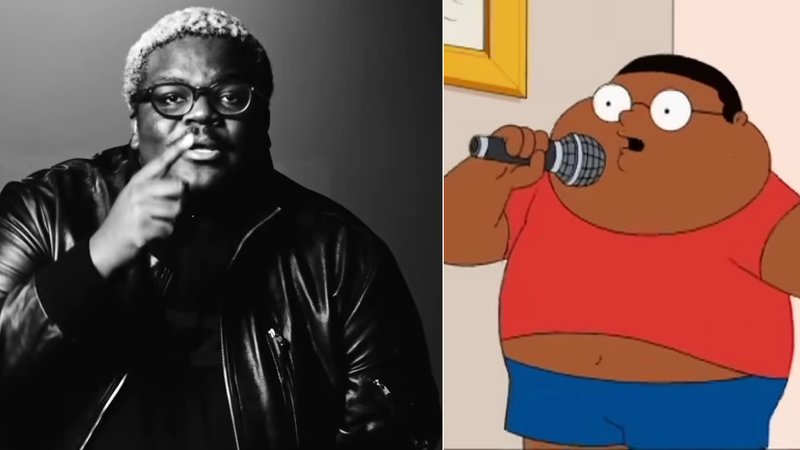
The mistake became a joke, the joke found Cleveland Jr. from The Cleveland Show, and the cartoon edits carried the chorus to people who had never heard of Blumengarten, KITSCHKRIEG or Shirin David. But the sound did not begin as a meme engineered for a short-form feed. It began as a song Blumengarten had nearly left behind.
What ‘Du bist gut genug’ actually means
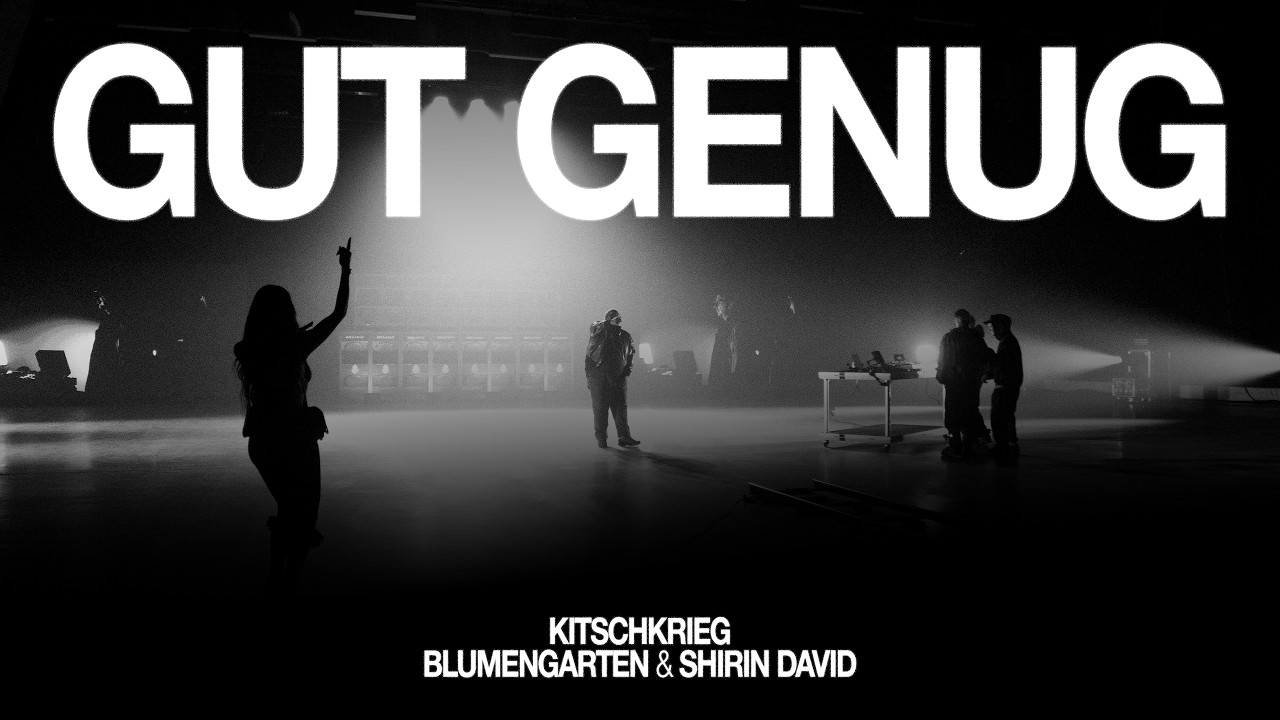
The phrase translates directly as ‘you are good enough.’ That plain meaning is the emotional release at the centre of ‘Gut genug,’ a three-minute collaboration credited to KITSCHKRIEG, Blumengarten and Shirin David. The verses circle insecurity, judgement and the feeling that achievement may still fail to satisfy other people. The chorus answers with four uncomplicated words.
That contrast explains why the excerpt works even before translation. Djima’s delivery climbs above the track with enough urgency to sound like a breakthrough. Listeners may not know what is being resolved, but they can hear that the line is meant to resolve something. Once the translation is supplied, a catchy piece of phonetic nonsense becomes a compact affirmation.
The nearly forgotten demo behind the hit
The earliest version belonged to Blumengarten. Djima and producer Sammy Eickmann told German broadcaster 1LIVE that ‘Gut genug’ was an older song they had almost forgotten when KITSCHKRIEG’s team approached them. BMG’s account of the record supports that sequence, describing the released track as an evolution of a Blumengarten demo rather than a song assembled only after the viral moment began.
KITSCHKRIEG heard a future in the abandoned material. The producers rebuilt it for their second album, ‘KITSCHKRIEG Zwei,’ and Shirin David joined the collaboration with a verse of her own. The single arrived on 22 May 2026 through SoulForce and Four Music, before its most recognisable section began travelling independently of the full recording.
This origin matters because it changes the usual viral-song story. The chorus was not written in response to a Cleveland Show edit, and the artists did not start with an English mishearing they hoped people would repeat. A finished collaboration escaped into short-form culture, where listeners supplied a second life the original demo had nearly been denied.
Who Blumengarten are
Blumengarten is the partnership of singer Rayan Djima and producer Sammy Eickmann. They grew up in Velbert, a city between the Rhineland and the Ruhr, attended school together and completed their Abitur before their musical partnership properly began. Their roles were unequal in a productive way. Eickmann had already learned instruments, arranging and production; Djima had not previously made music, written lyrics or performed onstage.
They began meeting in a family basement in 2021. The first sessions were less a calculated launch than two friends discovering what their different instincts could make together. Eickmann could construct and reshape the music. Djima brought an unusually bright, flexible voice and an emotional directness that did not sound polished into anonymity.

Their first three-song EP, ‘Sag deinen Freunden, dass du sie liebst,’ followed in 2022. A rooftop-session version of ‘Paris Syndrom’ with Paula Hartmann brought wider recognition, and the duo moved quickly through support slots, festivals, television performances and collaborations with established German artists. Their debut album, ‘Ich liebe dich für immer,’ arrived in March 2025.
By the time ‘Gut genug’ resurfaced, Blumengarten already had a clear identity: indie pop, hip-hop and soul-adjacent production arranged around vulnerable writing and Djima’s high register. The viral singer was not an anonymous voice discovered by an algorithm. He was the front half of a working duo whose catalogue had spent years building toward a larger audience.
What KITSCHKRIEG and Shirin David added
KITSCHKRIEG’s role was more than attaching a prominent production credit. The Berlin collective works as a producer and curator, placing distinct singers and rappers inside a controlled musical and visual world. For ‘Gut genug,’ that meant recognising the strength of Blumengarten’s discarded demo, expanding it and positioning it within ‘KITSCHKRIEG Zwei.’
Shirin David supplied another angle on the song’s central doubt. Her verse speaks from the position of a highly visible artist measured by success, appearance and public reaction, yet still vulnerable to the suspicion that none of it is sufficient. That perspective makes the reassurance larger than a private exchange. The chorus answers pressure that can come from an audience as easily as from within.
The collaboration also joined three different audiences: Blumengarten’s progressive-pop following, KITSCHKRIEG’s production world and David’s enormous German rap and social-media reach. The song entered the chart before the meme fully accelerated, then continued climbing until it reached number one in Germany. A later Skepta version acknowledged that the chorus had travelled beyond its original language market.
Why Rayan’s voice became the sound
The viral passage is unusually easy to isolate. Djima is visually central in the stark black-and-white video, his movement is loose enough to imitate, and the chorus reaches its emotional point in roughly the time required for a short-form clip. Most importantly, his upper register makes every syllable distinct even to listeners who cannot identify the words.
A more conversational performance might have remained attached to the track. Djima’s falsetto turns the line into an event. It can score a sincere encouragement post, an exaggerated transformation, a cartoon lip-sync or a joke about hearing German for the first time without losing its musical shape. The sound carries its own beginning, climax and release.
How ‘Doobie Scoot Canoe’ took over
Misheard lyrics spread when unfamiliar sounds can be rearranged into familiar ones. English-speaking listeners heard the rounded vowels and hard consonants of ‘Du bist gut genug’ and fitted them to words they already knew. ‘Doobie Scoot Canoe’ was inaccurate, memorable and close enough to sing along with. That was all it needed.
The phrase became more than a transcription error. Creators wrote it into captions, repeated it in comments and treated the nonsense wording as though it were the official hook. Other languages produced their own phonetic versions. The humour came from collective confidence: thousands of people could agree on words that the recording never contained.
Why Cleveland Jr. entered the meme
The Cleveland Show did not originate the sound. Cleveland Jr. became its unofficial visual mascot after the chorus was already circulating. Editors matched Djima’s high voice and expressive delivery with clips of the animated character singing or moving, creating the impression that the cartoon had somehow performed the German song first.
The comparison is intentionally loose. It depends on the audience recognising a shared vocal brightness, body language or simply the absurdity of replacing a stylish black-and-white performance with an American sitcom character. Once one edit established the connection, later posts no longer needed to explain it. Cleveland Jr. could appear on screen and the chorus supplied the rest of the joke.
This distinction is important to the backstory. The meme is a layer placed over the record, not the source of it. Removing the cartoon still leaves Blumengarten’s demo, KITSCHKRIEG’s reconstruction, David’s verse and the release that preceded the edits.
What the meme leaves intact
Virality often flattens a song into one usable emotion. ‘Gut genug’ has been luckier. Its mishearing is comic, but the translated line is sincere enough that people regularly share both versions together. A post can laugh at ‘Doobie Scoot Canoe’ while also telling its subject that they are good enough.
That double reading is why the sound has lasted beyond a single joke format. It rewards listeners twice: first as a phrase that seems delightfully nonsensical, then as a message whose simplicity explains the force in Djima’s voice. The artist backstory adds a third turn. The internet’s enormous affirmation began as an old demo its creators had almost forgotten.
Under the remixes, cartoons and invented English is a real sequence of decisions: Eickmann and Djima made the song, set it aside, KITSCHKRIEG heard what remained, Shirin David widened its perspective, and an audience carried four German words around the world. The meme changed how the chorus was heard. It did not change what the chorus meant.


No comments yet. Be the first to add something useful.